
Sales Development Representative (SDR): Meaning, Role, and Modern Framework for 2026
 Rishabh Jain
TL;DR
A Sales Development Representative (SDR) is the bridge between marketing and sales, responsible for prospecting, qualifying, and nurturing potential leads into sales-ready opportunities.
In 2026, the modern SDR uses AI-powered research, personalized outreach, and data-driven insights to build predictable pipelines and accelerate revenue growth.
Think of SDRs as the engine of the sales process, they don’t close deals, but they create the qualified conversations that make closing possible.
What Is an SDR in Sales?
Definition: A Sales Development Representative (SDR) is a sales professional responsible for identifying, connecting with, and qualifying potential customers before passing them to Account Executives (AEs) for deal closure.
Primary Role: SDRs focus on top-of-funnel activities — researching prospects, initiating contact through email or calls, and determining whether leads are a good fit.
SDR Meaning in Sales: An SDR plays a presales role focused on lead qualification rather than closing deals. They ensure that every conversation moving to the AE stage has buying intent and alignment with the company’s Ideal Customer Profile (ICP).
Alternate Titles: Also referred to as a Business Development Representative (BDR), Lead Development Representative (LDR), or Inside Sales Rep, depending on the organization’s structure.
SDRs don’t chase deals — they create conversations that convert.
Why SDRs Matter in Modern B2B Sales
In today’s B2B landscape, where buying cycles are longer and decision committees are larger, Sales Development Representatives (SDRs) play a crucial role in connecting marketing momentum with revenue outcomes.
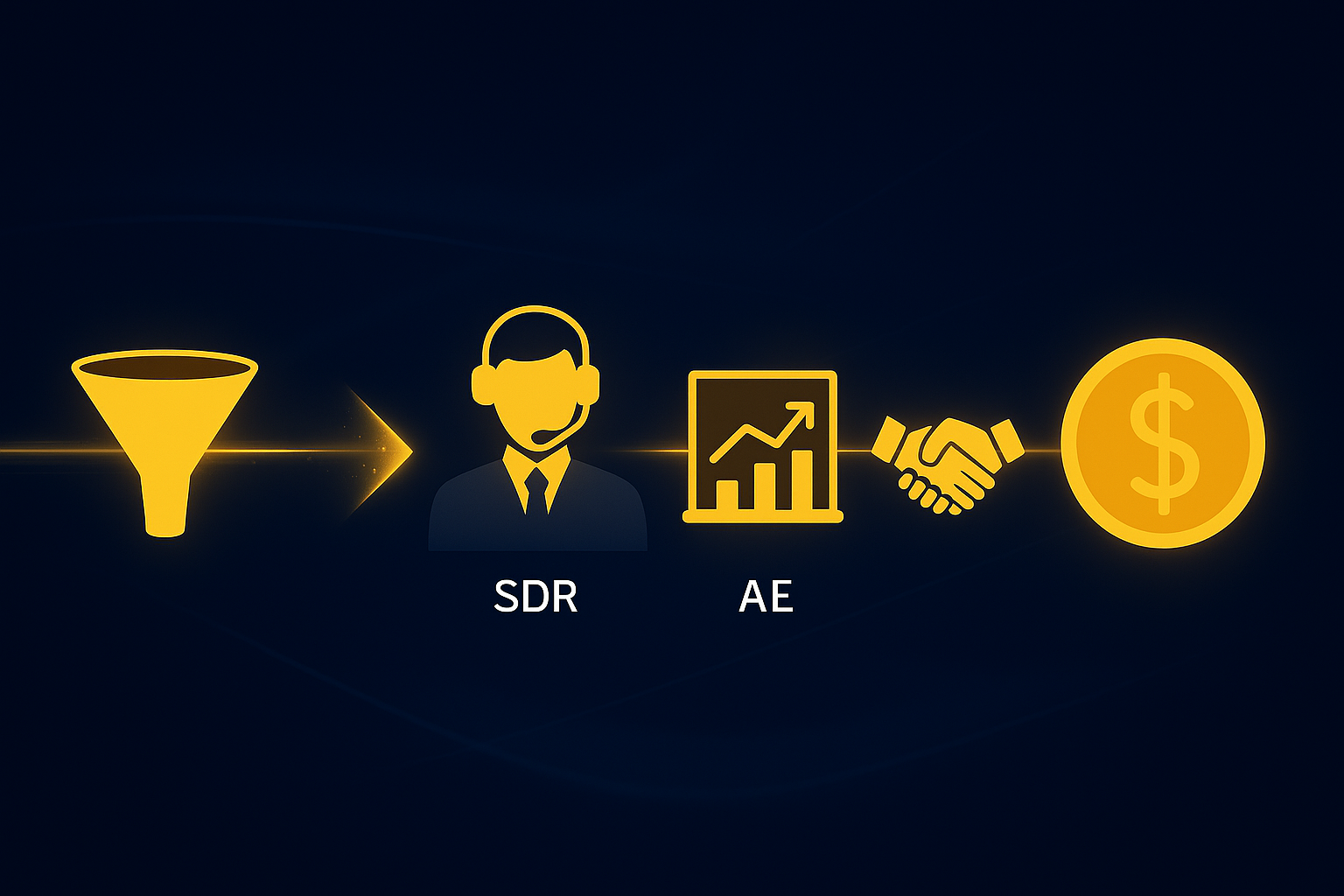
Here’s why SDRs are indispensable:
Fuel the Sales Pipeline: SDRs ensure a constant stream of qualified opportunities by identifying high-intent prospects and nurturing them until they’re ready to engage with Account Executives (AEs).
Bridge Marketing and Sales: They provide real-time feedback on lead quality, messaging resonance, and buyer behavior — closing the loop between demand generation and deal creation.
Enable Predictable Growth: A well-trained SDR team builds consistency in outreach and qualification, helping businesses forecast revenue with confidence.
Deliver Personalized First Impressions: SDRs humanize outreach, tailoring messages to each prospect’s needs, pain points, and goals — setting the tone for a trust-based customer journey.
SDR Roles and Responsibilities
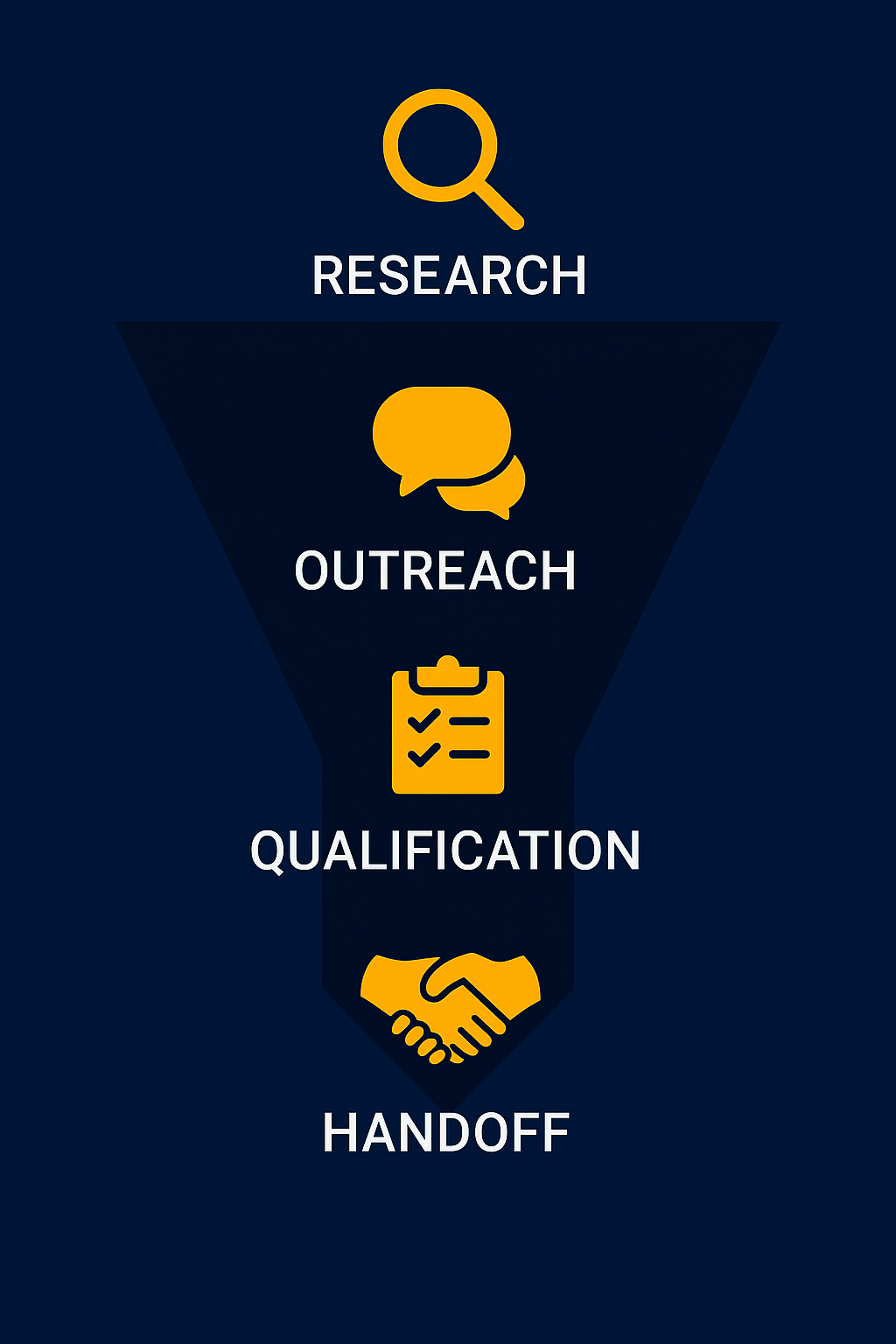
Lead Generation & Prospecting
An SDR’s first mission is to identify who is worth talking to.
Define the Ideal Customer Profile (ICP) using firmographic (industry, size), technographic (tools used), and intent-based (purchase signals) data.
Build and enrich prospect lists via LinkedIn Sales Navigator, ZoomInfo, Cognism, and other B2B databases.
Research accounts for buying signals such as funding rounds, new hires, or digital engagement spikes that indicate readiness to buy.
Pro Tip: Smart SDRs layer multiple data points — intent + fit + timing — to prioritize high-probability leads.
Related
Outreach & Communication
Once prospects are identified, SDRs shift to personalized engagement.
Craft tailored cold emails, calls, and LinkedIn messages focused on the buyer’s pain points — not product features.
Handle objections with curiosity and empathy instead of rebuttals.
Maintain multichannel sequences and consistent follow-ups across 5–7 touchpoints to stay top-of-mind.
Example: “Hey [Name], noticed your team’s expanding. Many companies at this stage optimize X — curious how you’re approaching it?”
Lead Qualification
The SDR’s success depends on turning interest into qualified opportunity.
Use qualification frameworks like BANT (Budget, Authority, Need, Timeline) or CHAMP (Challenges, Authority, Money, Prioritization).
Pass only sales-ready leads to Account Executives (AEs) for conversion.
Keep the CRM updated with notes, status, and next steps to ensure smooth handoffs.
Pro Tip: SDRs who log detailed CRM insights boost AE close rates by 20–30%.
Essential SDR Skills
Soft Skills
A great SDR blends emotional intelligence with discipline. The top performers excel at:
Communication & storytelling – crafting messages that connect rather than pitch.
Active listening – catching unspoken cues that uncover pain points.
Empathy & curiosity – understanding the buyer’s context before offering solutions.
Time management – balancing dozens of accounts and follow-ups efficiently.
Resilience under rejection – turning every “no” into insight for the next outreach.
Tip: Top SDRs sound more like consultants than sellers. Their tone builds trust, not pressure.
Technical Skills
In 2026, modern SDRs must master both people and platforms.
CRM fluency (HubSpot, Salesforce, Zoho CRM): log, track, and hand off leads seamlessly.
Sales automation tools (SalesEcho, Outreach.io): run sequences that balance automation with human touch.
Prospecting intelligence (Apollo, Lusha): enrich leads with verified data and buying signals.
Multichannel outreach (email, voice, social, video): personalize each message to meet buyers where they are.
Top SDRs combine human warmth + automation precision. It’s not about sending more — it’s about connecting smarter.
Benefits of Building an SDR Team
A well-structured Sales Development Representative (SDR) team is the foundation of predictable, scalable revenue. It bridges marketing, sales, and customer success — ensuring no lead slips through the cracks.
Scalable and repeatable sales model
SDRs create a process-driven system that grows with your pipeline — not just your headcount.Improved lead quality and conversion rates
By filtering out low-intent leads early, AEs spend time only on prospects who are truly ready to buy.Marketing and sales alignment
SDRs serve as the feedback loop, turning marketing data into actionable sales conversations.Faster revenue velocity
With focused outreach and qualification, opportunities move through the funnel faster — from interest to closed-won.Real-time insights into buyer intent
SDRs track behavioral cues, engagement patterns, and timing signals that help the team strike when interest peaks.
Pro Tip: Companies with specialized SDR teams often report 30–50% shorter sales cycles and higher close rates per rep.
SDR Career Path & Growth
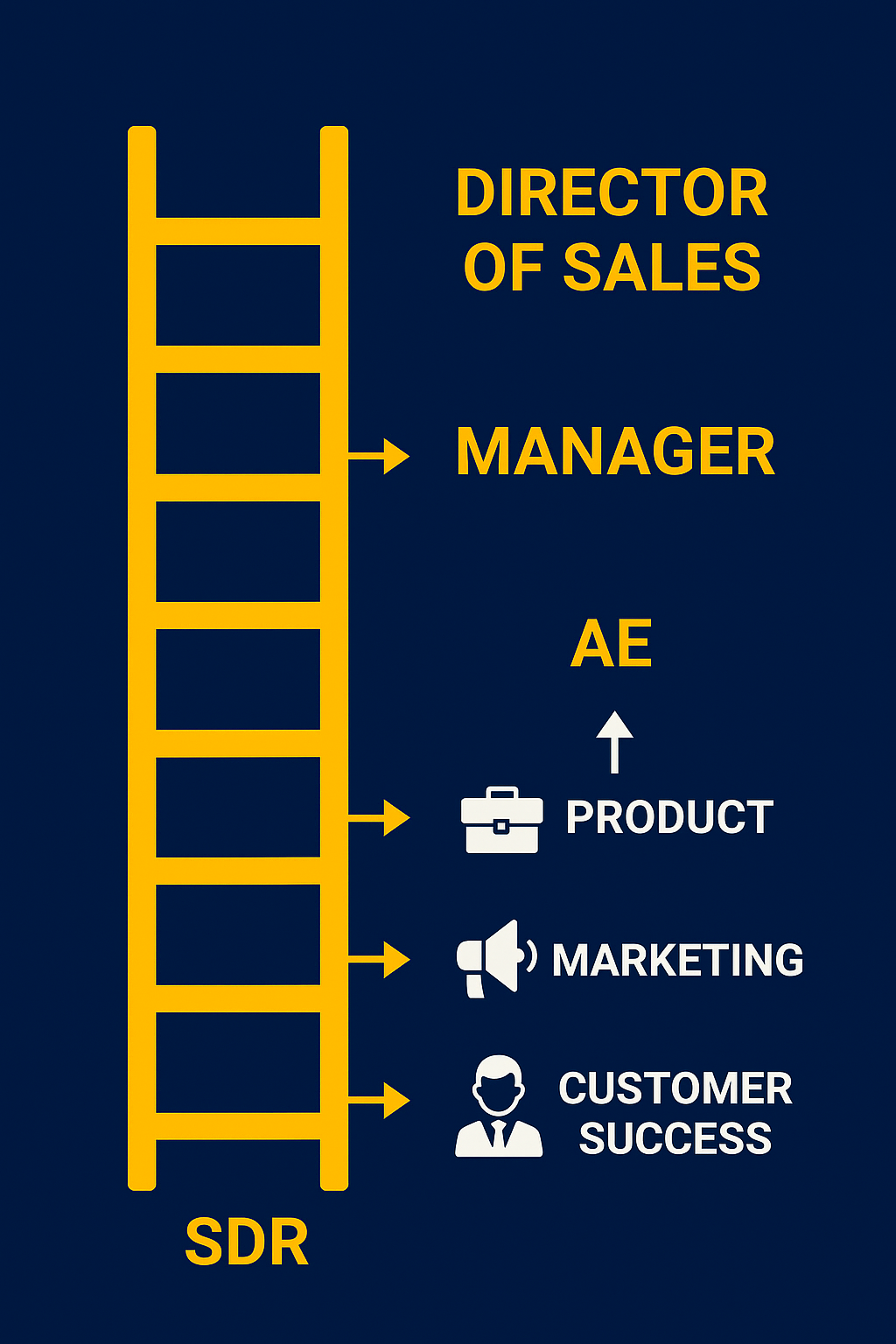
A career as a Sales Development Representative (SDR) is one of the most rewarding starting points in B2B sales. It builds the foundation for communication, persuasion, and data-driven selling — skills that open doors across departments.
Progression Path
SDR → Account Executive (AE) → Sales Manager → Director of Sales
Each stage deepens your responsibility — from generating leads to closing deals, managing teams, and driving revenue strategy.
Lateral Career Moves
Some SDRs pivot into Customer Success, Product Marketing, or RevOps to leverage their understanding of customer needs and buyer journeys.
Others move into partnerships or enablement roles, focusing on cross-team collaboration and business growth.
Promotion Tips
Hit your KPIs: Consistent performance builds credibility fast.
Shadow AEs: Learn advanced selling and negotiation techniques.
Master demo storytelling: Understanding how deals close helps you qualify smarter.
Pro Tip: Top SDRs who combine sales empathy with operational insight often get promoted to AE roles within 12–18 months.
Getting Hired as an SDR
Breaking into an SDR role doesn’t require years of experience — it’s about showing hunger, coachability, and communication skills. The best candidates prove they can prospect before they’re even hired.
Build a strong LinkedIn presence: Engage with sales communities like Salesblazers, RevGenius, and SDR Nation to learn, connect, and get referrals.
Invest in professional development: Take reputable SDR bootcamps or Coursera certifications that teach modern prospecting, CRM workflows, and cold outreach fundamentals.
Showcase practical projects: Create mock cold email campaigns or short prospecting videos to demonstrate real outbound thinking.
Quantify your achievements: Highlight metrics such as:" 50+ calls/day, 20% email reply rate, 15 demos booked/month.”
SDR Tools & Technology Stack (2026 Edition)
The modern Sales Development Representative tech stack empowers teams to work smarter — automating research, personalization, and pipeline tracking. Here’s the essential toolkit every SDR team needs in 2026:
Category | Tools | Use Case |
|---|---|---|
CRM | Salesforce, HubSpot, Zoho | Lead tracking, activity logging, and reporting |
Data & Enrichment | ZoomInfo, Lusha, Apollo | Prospect discovery and firmographic enrichment |
Automation & Engagement | SalesEcho, Outreach.io | Smart sequences, AI follow-ups, and workflow automation |
Analytics & Attribution | Factors.ai, Dreamdata | Multi-touch attribution and performance insights |
Related
SDR Metrics That Matter
Tracking the right sales development metrics helps leaders identify what’s working — and where the team needs improvement. These KPIs define performance, productivity, and pipeline quality for every SDR team.

Core SDR Metrics
Meetings booked per month: The gold standard for SDR performance.
Qualified pipeline generated: Value of opportunities created that match ICP criteria.
Response rates by channel: Measure engagement from email, phone, and social touchpoints.
Conversion rate (lead → opportunity): Shows lead quality and SDR effectiveness.
Average number of touchpoints to connect: Reveals persistence, timing, and outreach discipline.
Pro Tip: Top-performing SDRs balance volume and relevance — maintaining a 15–25% meeting-to-opportunity conversion rate.
Common SDR Challenges (and Fixes)
Even the best SDRs hit roadblocks — but knowing how to diagnose and fix them turns challenges into growth levers.
Challenge | Fix |
|---|---|
Low reply rate | Personalize every outreach — reference mutual connections, recent activity, or pain points. |
Lead fatigue | Prioritize quality over quantity by refining your ICP and focusing on high-intent segments. |
Misalignment with AEs | Hold weekly syncs to share feedback and ensure lead expectations match reality. |
Burnout | Automate repetitive admin work and celebrate micro-wins to keep morale high. |
SDR Playbook — From Research to Revenue
Every top-performing SDR team follows a repeatable framework — not just scripts. This playbook ensures consistent prospecting, smarter outreach, and measurable revenue impact.
1. Define ICP & Segmentation
Start by identifying your Ideal Customer Profile using firmographics, intent data, and engagement triggers.
2. Identify the Right Channels
Use a blend of email, phone, and social outreach — meet prospects where they’re most active.
3. Personalize Outreach
Craft tailored messages around pain points, goals, or recent company milestones.
4. Nurture Until Sales-Ready
Build trust over multiple touchpoints. Offer insights, not pressure.
5. Measure, Iterate, Repeat
Track KPIs like meetings booked, conversion rates, and response times — refine your strategy monthly.
Pro Tip: Treat every SDR process like a loop, not a line — each cycle makes your targeting sharper and results stronger.
FAQs
1. What does an SDR do in sales?
An SDR identifies, engages, and qualifies leads before passing them to Account Executives (AEs) for closing. Their main goal is to generate a consistent, high-quality sales pipeline.
2. What skills are needed to become a Sales Development Representative?
Strong communication, active listening, persistence, CRM proficiency, and empathy are essential. Top SDRs also understand prospect psychology and data-driven outreach.
3. What’s the difference between an SDR and a BDR?
While both roles focus on pipeline generation, SDRs handle inbound or warm leads, whereas BDRs typically handle outbound prospecting and cold outreach.
4. Is being an SDR a good career?
Yes. SDRs build the foundation for careers in Account Executive roles, Customer Success, Marketing, or Revenue Operations. It’s one of the fastest-growing entry points in B2B tech.
5. What’s the average SDR salary in 2026?
Compensation varies by region, but most SDRs earn $60K–$100K annually, including bonuses and commission based on pipeline goals.
6. How do SDRs measure success?
Key metrics include meetings booked, qualified opportunities, response rates, and total pipeline generated.
7. What’s the best SDR tool stack?
Modern SDRs rely on tools like SalesEcho, Salesforce, Outreach.io, Apollo, and Factors.ai for data, automation, and analytics.
8. How can I become a better SDR fast?
Shadow top performers, master your messaging, and consistently review metrics. The key: persistence plus personalization.
Conclusion
The Sales Development Representative role is no longer about dialing blindly or blasting cold emails — it’s about intelligent, insight-led outreach.
Modern SDRs are the bridge between marketing intent and revenue outcomes, combining automation with human connection to build trust at scale.
As AI, personalization, and buyer expectations evolve, the SDR’s role will only become more strategic. The next generation of SDRs won’t just fill the pipeline — they’ll own the first 50% of the sales experience.
Final Thought: Every great deal starts with a conversation — and every great conversation starts with a great SDR.